1953 Wheat Penny Error List with Pictures
Seven documented error types — from common die clips to a $6,000 wrong planchet
1953 Wheat Penny — Error Coin Reference
| # | Error Type | Rarity | Circulated | MS / Uncirculated |
|---|---|---|---|---|
| 1 | Repunched Mint Mark (RPM FS-501) | Uncommon | $10–$35 | $50–$2,500+ |
| 2 | Doubled Die Obverse (DDO) | Several varieties | $15–$100 | $50–$250+ |
| 3 | Wrong Planchet (Dime Planchet) | Rare | $1,000–$2,500 | $3,000–$6,000+ |
| 4 | Off-Center Strike | Occasional | $3–$85 | $50–$300+ |
| 5 | Clipped Planchet | Occasional | $5–$50 | $30–$250 |
| 6 | Doubled Date | Minor varieties | $3–$10 | $15–$50+ |
| 7 | Extra Eyelid (1953-D) | Specialist variety | $3–$10 | $10–$35 |
Error #1: Repunched Mint Mark (RPM FS-501)
The premier 1953-D error — secondary D impression visible under magnification
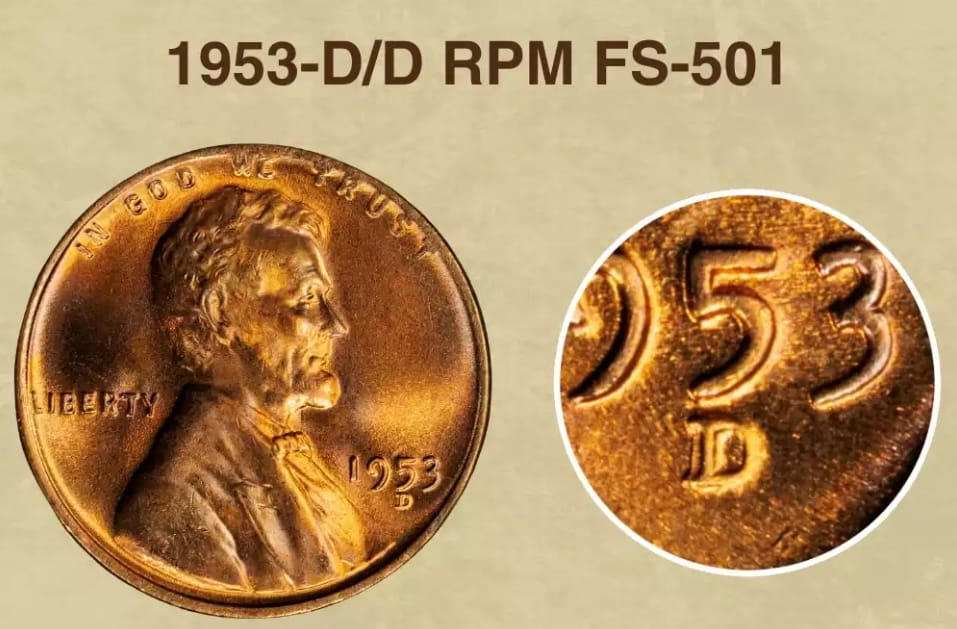
1953-D RPM FS-501 — doubled D mintmark with secondary shadow displaced northward below date
The 1953-D/D RPM FS-501 stands as the premier error variety for this year. The D mintmark was punched into the working die multiple times with slight misalignment, leaving a clear ghost impression of the earlier punch — typically displaced northward from the final D. This variety demonstrates exceptional market behavior: prices are modest through circulated grades, but experience exponential appreciation at MS-67 and above, reaching over $2,000 for gem specimens.
How to identify: Use 10x magnification and direct light at a shallow angle across the D mintmark below the date • The secondary D appears as a distinct shadow with full depth and rounded edges — not flat shelf-like machine doubling • The separation between primary and secondary impressions remains consistent across the entire letter • Compare against confirmed FS-501 images focusing on the exact displacement angle
Value: $10–$35 (circulated) — $50–$200 (MS60–65) — $400–$800 (MS66) — $1,200–$2,500+ (MS67+)
Error #2: Doubled Die Obverse (DDO)
Hub doubling on LIBERTY, date & IN GOD WE TRUST — multiple varieties documented
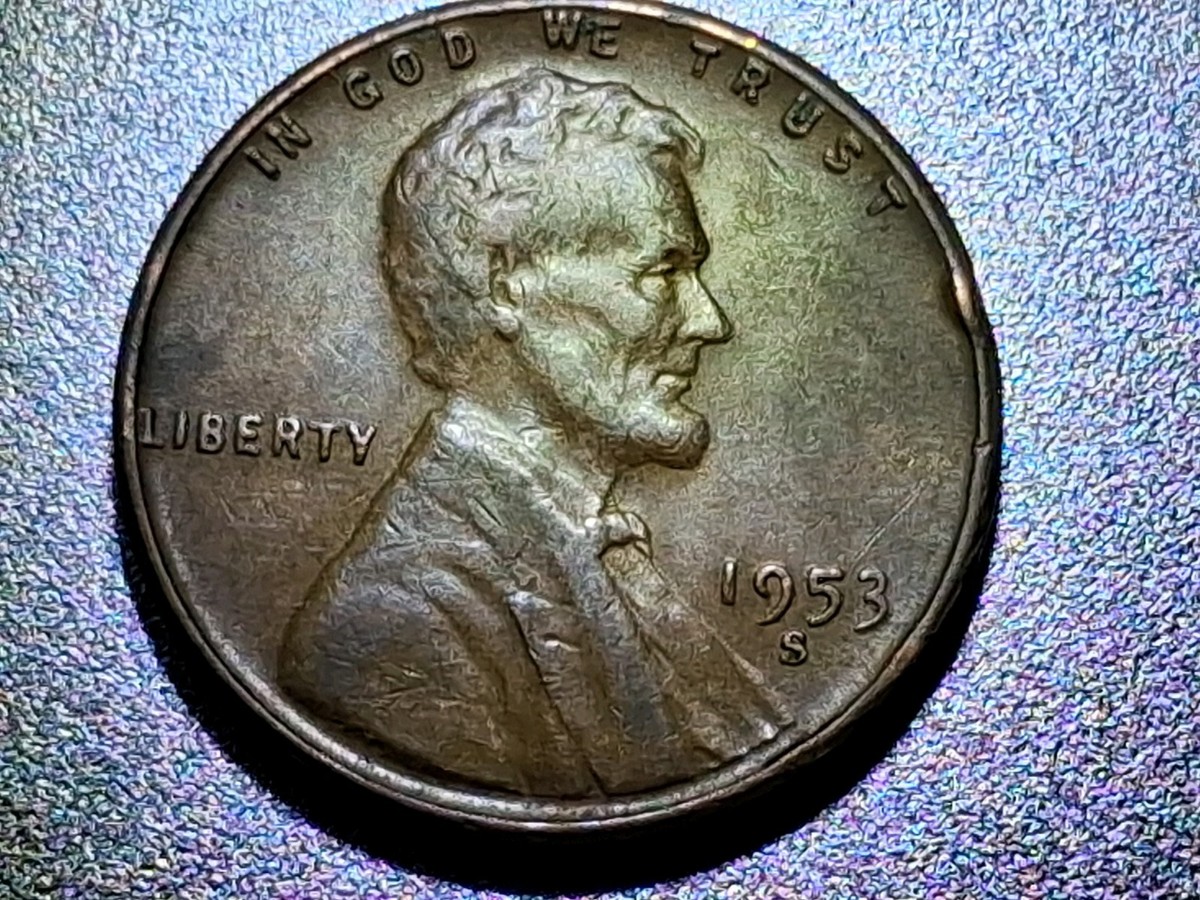
1953 DDO — hub doubling visible on LIBERTY letters and the numeral 3 of the date
Doubled die obverse varieties result from misalignment during the die hubbing process, transferring design elements twice onto the working die at slightly different positions. On 1953 pennies, look for doubling on the date numerals (especially the final 3), LIBERTY, and IN GOD WE TRUST. Authentic doubled dies display CONECA Class I through VIII characteristics with strong separation on letter serifs and numerals.
How to identify: Examine the date beginning with the numeral 3 for the most pronounced separation • Proceed to LIBERTY where vertical strokes on B, E, R, and T often show strongest doubling • Authentic doubling is raised and crisp — flat, rounded doubling indicates worthless machine doubling • Document under raking light photography before submitting for authentication
Value: $15–$35 (minor doubling) — $50–$100 (moderate) — $125–$250+ (strong, high grade)
Error #3: Wrong Planchet Strike (Silver Dime Planchet)
Penny dies struck on a dime-sized silver planchet — immediately identifiable by size and weight
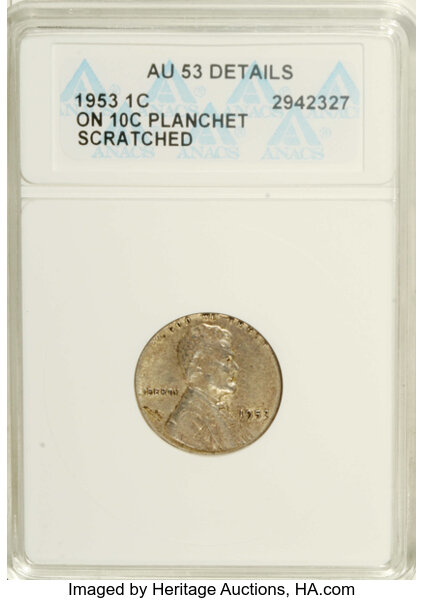
1953-D Wrong Planchet — Lincoln cent design struck on smaller silver dime planchet
Wrong planchet errors represent the most dramatic mint mistakes, occurring when blanks intended for different denominations accidentally enter the wrong press. The 1953-D on a silver dime planchet is the most valuable wrong planchet error from this year, immediately identifiable by its smaller size and silvery color. The smaller dime planchet cannot accommodate the full penny design, resulting in missing peripheral elements at the edges.
How to identify: Weigh on a precision scale accurate to 0.01g — standard pennies weigh 3.11g, silver dimes weigh 2.50g • Measure diameter with calipers — pennies 19.05mm vs dimes 17.91mm • Silver composition produces distinctly different color and ring tone compared to copper • Edge should be smooth without reeding • Professional PCGS/NGC authentication is mandatory
Value: $1,000–$2,500 (circulated) — $3,000–$6,000+ (uncirculated examples)
Error #4: Off-Center Strike
Misaligned planchet creates partial design with blank crescent area
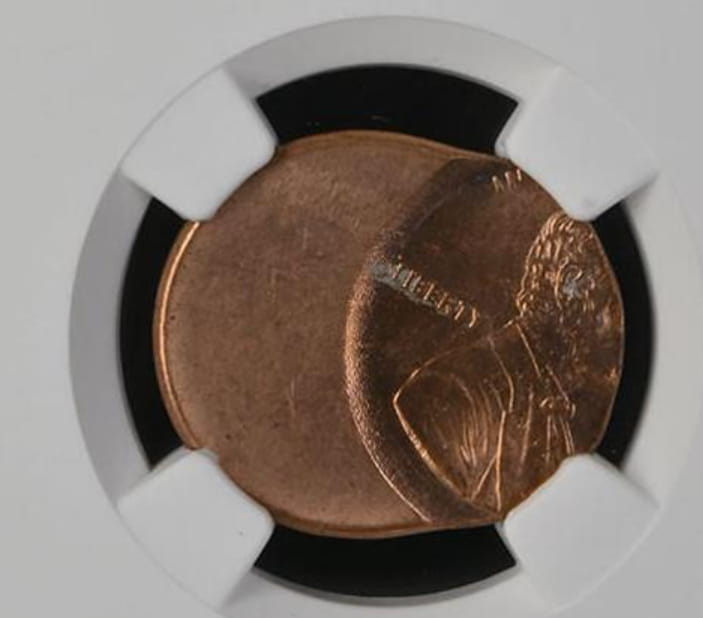
1953 Off-Center Strike — visible blank crescent, date retained on partial design
Off-center strikes develop when feeding mechanisms fail to position planchets accurately within the collar before die impact. The resulting coins display partial designs with corresponding blank areas. The date’s visibility and the percentage of misalignment are the two most critical value factors. Dramatic 40–50% off-center strikes with the full date visible command the highest premiums.
Value drivers: Date must be fully visible • 10–50% offset range is most desirable • The blank crescent area must show smooth, unstruck planchet surface without any design transfer • Multiple-strike off-center errors command substantial premiums • Distinguish from broadstrikes which lack the defined blank crescent
Value: $3–$10 (3–5%) — $15–$35 (10–25%) — $40–$85 (25–40% with date) — $100–$300 (50%+, full date, MS)
Error #5: Clipped Planchet
Blanking punch overlap removes a curved or straight section of the coin’s edge
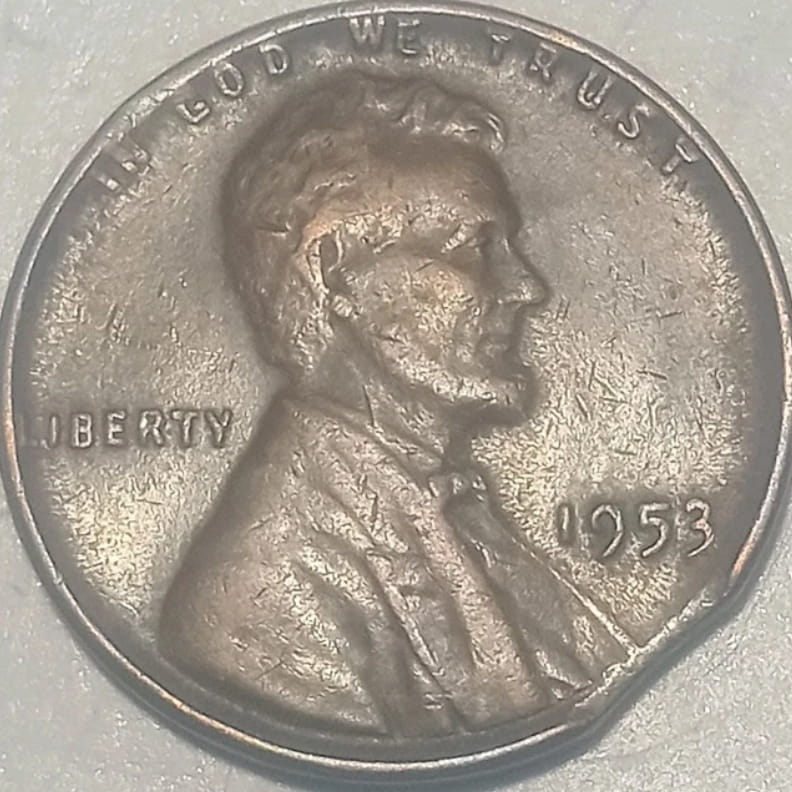
1953 Clipped Planchet — curved section missing from edge where blanking punch overlapped
Clipped planchets originate during the blanking operation when metal strip feeding mechanisms malfunction, causing overlap between successive punch positions. This creates blanks with curved or straight sections missing before striking begins. Curved clips following the blanking punch’s circular arc are most common; straight clips indicating sheared metal edges are less frequent but equally legitimate.
How to identify: Genuine clips display the planchet’s internal copper-zinc composition with no evidence of filing, sawing, or post-mint removal • Reject coins showing fresh, bright copper in the missing area, which indicates recent damage • Measure the clip percentage by estimating the missing area relative to normal diameter • Clips affecting Lincoln’s portrait or wheat ears (12/6 o’clock positions) command premiums
Value: $5–$15 (small clip) — $20–$40 (moderate) — $45–$100 (large) — $125–$250 (dramatic, design impact)
Error #6: Doubled Date
Date punched multiple times with slight misalignment — look for shadow on the numeral 3
1953 Doubled Date — secondary impression visible on the numeral 3, hand-punching era artifact
Doubled date errors occurred during the hand-punching era when date punches were applied individually to each die, and occasional misalignment between punches left ghost impressions. On 1953 pennies, look for doubling particularly on the numeral 3, which may show a shadow or secondary raised impression slightly offset from the primary digit.
How to identify: Examine the “3” of 1953 first — the curve of the numeral shows secondary impressions most dramatically • The doubling should appear as raised, crisp secondary impressions • Flat, shelf-like doubling indicates worthless machine doubling • Values range from minor additions to the base coin value for subtle examples up to $25 or more for dramatic specimens
Value: $3–$10 (minor doubling) — $15–$50+ (dramatic, high-grade examples)
Error #7: Extra Eyelid (1953-D)
Subtle die doubling creates an additional line at Lincoln’s eyelid
1953-D Extra Eyelid — additional line visible at Lincoln’s upper eyelid area under magnification
The 1953-D extra eyelid error shows an additional line or doubling in the area of Lincoln’s eyelid on the portrait. This die variety results from die doubling or abraded die damage, creating the appearance of an extra eyelid line above or below the primary design. While not as dramatic as major doubled dies, these varieties are popular with specialists who focus on wheat cent die varieties.
How to identify: Examine Lincoln’s eye area under at least 10x magnification • Look for an extra raised line at the eyelid margin, distinct from normal die wear • The additional line should appear as a deliberate design element rather than a random scratch • Compare against confirmed examples before attributing this variety • Subtle die varieties like this are best confirmed using CoinKnow’s image recognition tools
Value: $3–$10 (typically adds modest premium to base value depending on condition)